beginner
What is Kyabakura? Japan's Hostess Club Culture Explained (2026)
May 17, 2026
//What is Kyabakura? Japan's Hostess Club Culture Explained (2026)
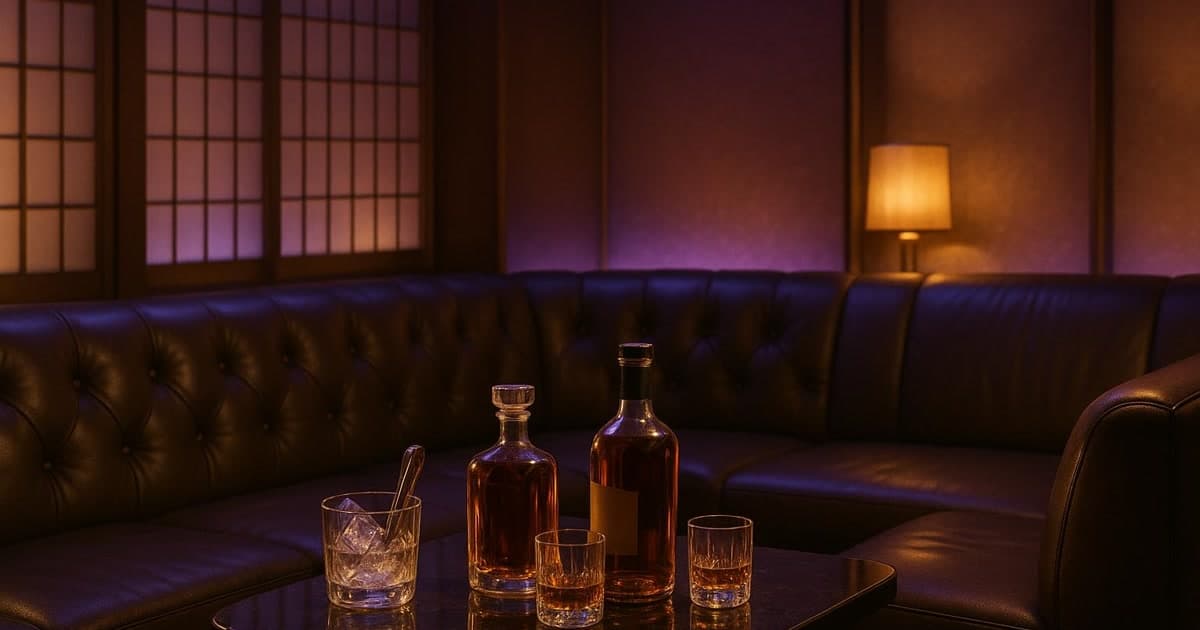
Kyabakura (キャバクラ) is a uniquely Japanese form of evening hospitality. A clear definition, what happens inside, how it differs from snack bars and hostess clubs, the legal framework (Fueihou), and why it exists.
Quick Answer
Kyabakura (キャバクラ) is a Japanese cabaret club where female hosts called "casts" sit with guests, pour drinks, and provide entertaining conversation in a styled lounge setting. It is regulated under Japan's Fueihou (Adult Entertainment Business Law) but is not sexual — physical contact is prohibited. The experience is purely conversational and social, paid by the hour, and is a normalised part of Japanese business and leisure culture.
Etymology and origin
"Kyabakura" is a Japanese portmanteau combining two loanwords: kyabarē (キャバレー — French "cabaret") and kurabu (クラブ — English "club"). The format emerged in 1980s Tokyo as a more accessible, casual evolution of high-end hostess clubs (kōkyū kurabu), and the model rapidly spread across Japan during the bubble economy.
Today, kyabakura is one of the most visible parts of Japan's mizu-shōbai (水商売 — literally "water trade", the night-time hospitality industry).
What happens inside?
A typical kyabakura visit unfolds like this:
- Reception — A staff member confirms your session length (set time) and price, and seats you at a table.
- First cast joins — A female cast comes to your table, pours your first drink, and starts conversation.
- Cast rotation — Every 15–20 minutes, the cast at your table may change, allowing you to meet several. You can request a specific cast (shimei) for a fee.
- Conversation — The cast keeps the table lively: light topics, your interests, occasionally karaoke at venues that have it.
- Cast drinks — You may be asked "May I have a drink?" — a courteous request you can accept (the drink is added to your bill).
- Closing — At the end of your set, staff offer extension or the bill (shime). Pay and leave.
The experience is conversational, not transactional. Casts are entertainers — think hostess-with-craft rather than escort.
How is kyabakura different from other Japanese nightlife?
Snack bar (sunakku)
Smaller, owner-run, neighbourhood pubs. The "mama" (owner) and one or two staff serve drinks and chat. Lower price (¥3,000–¥7,000 / hour), more relaxed, often regulars-only feel. No formal set system.
Hostess club (hosutesu kurabu / 高級クラブ)
The premium parent category of kyabakura. Older, more refined, business-clientele oriented. Higher prices (¥30,000+ / hour), introduction-only at many establishments. Kyabakura is the more accessible little sibling.
Girls bar (gāruzu bā)
Female bartenders chat across the bar. No set fee, no nomination — pay per drink. Casual entry-level format.
Strip club / soapland / "deri-heru"
These are sexual services regulated under different parts of Fueihou. Kyabakura is categorically not in this group — physical contact is prohibited.
Legal framework: Fueihou
Kyabakura operates under Japan's Fūeihō (風俗営業法 — Entertainment Business Law), specifically the category for "businesses serving food and drink with hospitality". Key regulations:
- Operating hours are restricted (must close by midnight or 1:00 in some wards — premium venues often hold "after" licenses for later hours).
- Casts must be 18+ with verified ID; underage employment carries serious penalties.
- Physical contact (beyond a handshake) is prohibited by law.
- Pricing must be transparently displayed at the venue.
- Licensed by the local prefectural Public Safety Commission (police-managed).
Vetted venues on KTV Nightlife Japan all hold valid Fueihou licenses — see our editorial policy.
Why does kyabakura exist?
Kyabakura fills a culturally specific role in Japan:
- Business socialisation — Japanese business culture historically values after-hours bonding. Kyabakura offers a neutral, hospitality-rich setting for client entertainment.
- Decompression — Demanding work culture, small living spaces, and indirect social norms make professional hospitality valuable.
- Skilled hospitality as a craft — Top casts are trained communicators with significant income; the role is a recognised, if controversial, career.
Who goes to kyabakura?
- Japanese salarymen after work, often in groups
- Business clients being entertained
- Tourists — increasingly common as foreigner-friendly venues have multiplied
- Solo regulars visiting "their" favourite cast
- Couples and women — increasingly accepted at modern venues
Common misconceptions
- "It's a strip club" — No. Different legal category, different format.
- "It's prostitution" — No. Physical services are illegal and not provided.
- "You can date the cast" — Casts maintain professional distance. Personal contact details are not exchanged at work.
- "It's only for rich men" — Entry-level kyabakura starts around ¥5,000–¥10,000 for a casual visit.
Frequently Asked Questions
Is kyabakura the same as KTV?
Internationally, "KTV" is the loose marketing label that venues use to communicate the experience to non-Japanese guests. In Japanese, the proper term is kyabakura.
Is it safe and legal?
Yes — kyabakura is a licensed, regulated industry. Stay with vetted venues to avoid the small minority of unlicensed operators.
Can women visit kyabakura?
Yes. Mixed-gender groups and solo women are increasingly common at foreigner-friendly venues.
Do I need to speak Japanese?
Not at vetted Roppongi or Ginza venues with bilingual staff. See our Roppongi guide.
Plan your first visit
Read the Complete KTV Guide for Foreigners, browse our vetted store directory, or message our free bilingual concierge.


